In 1916, a Vernal businessman needed tons of fancy bricks for a new bank, so he mailed them. Package by package, the bricks for the front of the Bank of Vernal traveled roughly 400 miles through the U.S. Post Office, and the flood of parcels helped push the government to rewrite its shipping rules for the whole country.
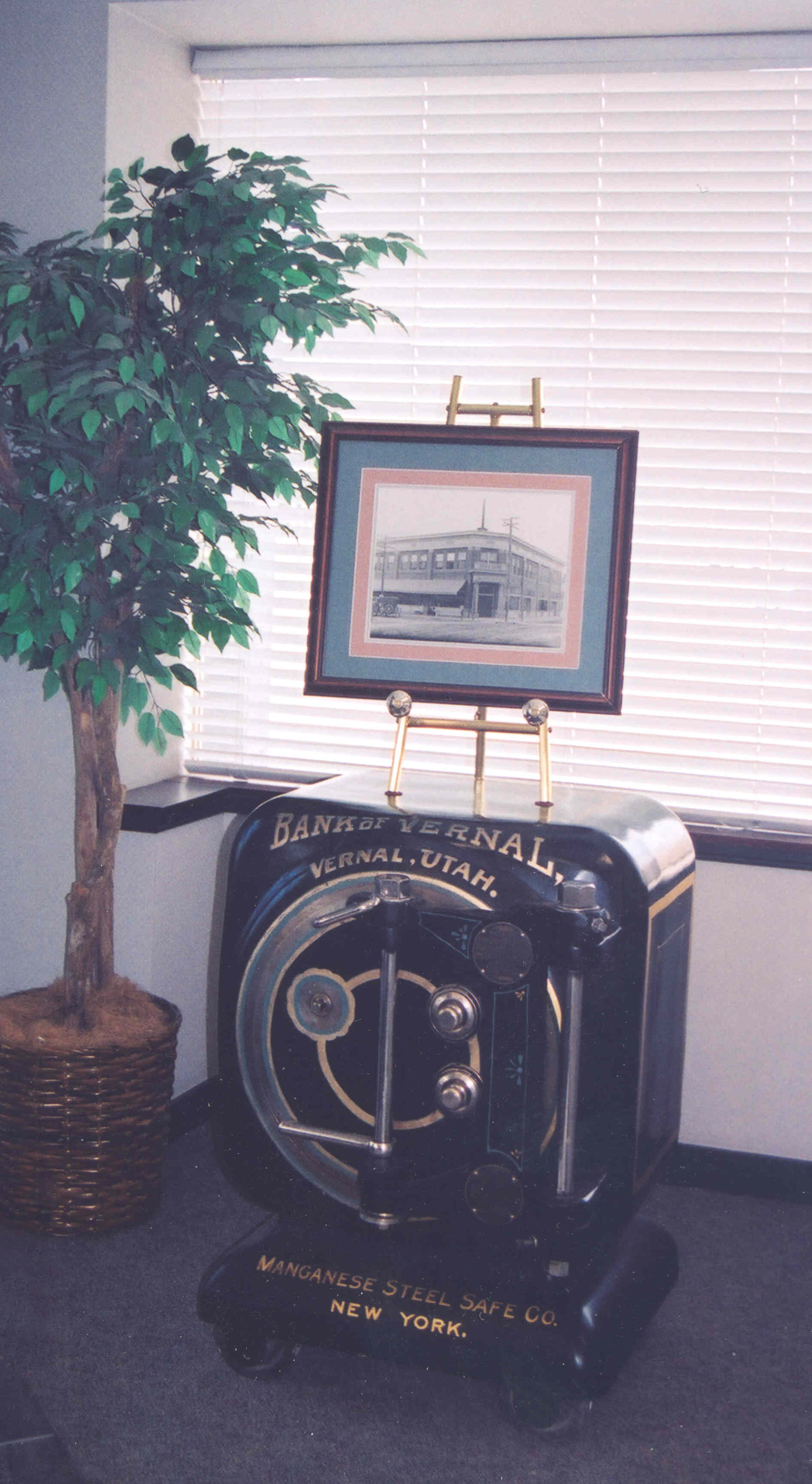
The building still stands on Vernal's Main Street. It still works as a bank, and it still carries the nickname locals gave it more than a century ago: the Parcel Post Bank. You can see it for free in about 10 minutes, and Holly Days on Friday, Nov. 27, makes it a good excuse to go.
Why he mailed the bricks
In the 1910s, Vernal sat in a high desert valley far from any railroad. Getting heavy goods into the Uinta Basin meant hiring freight wagons, and freight was expensive.
William Horace Coltharp, one of the bank's directors, was putting up a two-story building on the corner of Main Street and Vernal Avenue to house the Bank of Vernal and other businesses. Local brick was fine for most of the walls, but for the face of the building he wanted durable pressed brick from Salt Lake City. John Barton, a Utah State University history lecturer, told the Deseret News in 2014 that shipping those bricks by commercial freight wagon would have cost four times the cost of the bricks.
Then Coltharp noticed what the Post Office had just started. Parcel Post began in 1913, and by 1914 it accepted packages up to 50 pounds. Rates were set by postal zones measured as the crow flies, and Vernal sat only about 125 miles from Salt Lake City. That put the town in a cheap zone, even though the real trip by land was far longer. Barton said parcel post rates were half the freight cost, and Vernal merchants had already noticed: the town's little post office was buried in flour, sugar, cement and canned goods arriving by mail.
So the bricks went in the mail. Each one was wrapped in paper by itself and packed about 10 to a crate, just under the 50-pound limit. Thousands of them, about 37 1/2 tons by the Postal Service historian's count (another source says 40), rode the rails east into Colorado through the town of Mack, then came back into Utah and finished the trip overland to Vernal. A 125-mile hop on the map became a journey of around 400 miles.
The post office lost money on every heavy box. When Coltharp asked whether the parcels could be dropped at his building site, he was told no. Mail gets picked up at the post office like everyone else's. Picture crates of bricks stacked around the post office while the town watched a bank arrive one box at a time.
The rule that came too late
Postal officials had been unsure what counted as an "unusual" shipment, and Vernal's bricks helped them decide. In November 1916, the Post Office announced that anyone mailing more than 200 pounds of non-perishable goods to one person on the same day needed approval from Washington first.
By then it didn't matter for Coltharp. The brickwork was finished that same month, and the bank moved into its new home in early 1917. The story was odd enough that it later turned up in Ripley's Believe It or Not.
There's a twist that keeps the legend honest: the whole building wasn't mailed. Only the outside bricks came by Parcel Post. The inner walls used bricks made right in Vernal. And the town kept loving the mail long after the rule change. By 1921, more than three tons of parcels were still arriving in Vernal every day.
Seeing the Parcel Post Bank today
The Bank of Vernal became a Zions Bank branch in the 1970s, and it's still a working bank at 3 West Main Street. It's listed on both the Utah State Register and the National Register of Historic Places. Zions finished a roughly two-year renovation in 2022.
You don't need to be a customer to look. Stand on the sidewalk and find the red pressed brick on the face of the building. Photos of the building show historical plaques on the wall near the main entrance, and one, placed by the Daughters of Utah Pioneers, calls it the "Parcel Post Bank of the World." Kids can do the math: if each box held about 10 bricks, how many trips did the mail carrier make?
It's an active bank, so admire it from outside and keep photos to the exterior. If you step into the lobby during business hours, be respectful of customers and staff.
Where: Zions Bank (the historic Bank of Vernal), 3 West Main Street, Vernal, at the corner of Main Street and Vernal Avenue
Hours: Lobby hours vary by source, so call ahead. The outside of the building can be viewed any time from the sidewalk.
Cost: Free
Good for: History buffs, families, photo stops and road-trippers on U.S. 40
Time needed: 10 to 15 minutes
Make a day of it on Main Street
The Parcel Post Bank sits right on Main Street, so it's easy to string together a mostly free day downtown.
- Museum of Uintah County (free): At 155 East Main Street, the museum covers the people of the Uinta Basin from the first peoples forward, with a play area for kids. Fall and winter hours are Monday to Thursday 9 a.m. to 5 p.m., Friday 9 a.m. to 4 p.m. and Saturday 10 a.m. to 4 p.m. It's closed Sundays and most holidays, so call 435-789-7399 before you go on Nov. 27. A Winter Art Market of local artists runs through December.
- Utah Field House of Natural History State Park Museum: At 496 East Main Street, you can walk among life-size dinosaurs and real fossils. It's open Monday to Saturday 9 a.m. to 5 p.m. Day-use fees are $10 for adults, $8 for seniors, $5 for kids 6 to 12 and free for kids 5 and under, and a Utah State Parks annual pass also works. Call 435-789-3799.
- Vernal Holly Days, Friday, Nov. 27, 2026: This free festival fills downtown with holiday fun, a Santa's Workshop of local vendors and the Parade of Lights along Main Street in the evening. The Museum of Uintah County also hosts a gingerbread house contest for the event, with fully edible entries dropped off Nov. 24 or 25. Confirm times on the city's community calendar.
- Find a local bite: Browse Vernal businesses on TrailBlaze and support a local spot before the parade.
More local businesses in Vernal
Find other great local businesses on the TrailBlaze Vernal city page.
See Vernal on TrailBlaze →Cover photo: A. E. Crane, U.S. Department of Transportation, Public domain, via Wikimedia Commons (license).